Eva Reichel
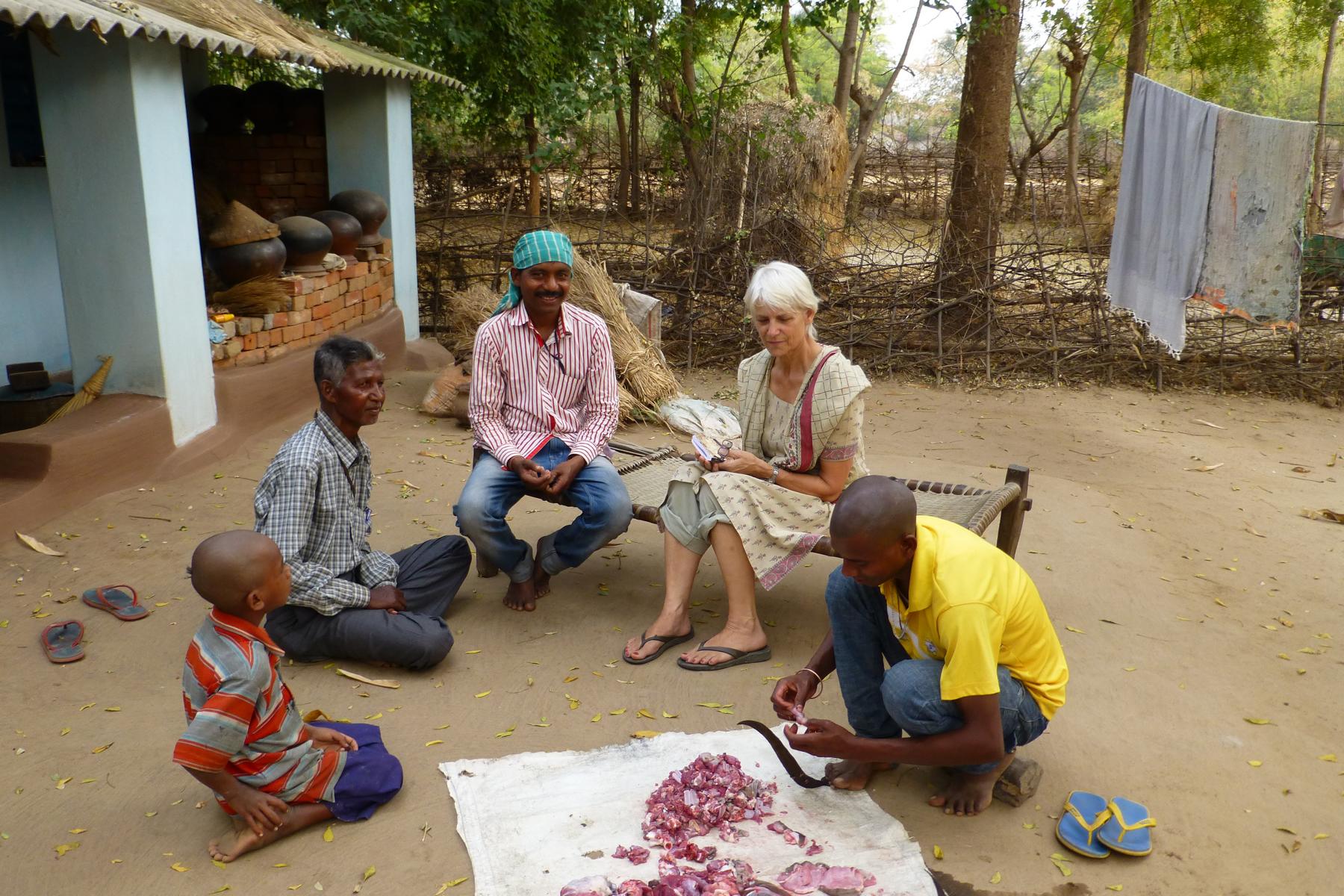
After finishing my professional career, I spent nearly a year travelling through China, Southeast Asia, and India, along with my husband. I thought of it as a pause before entering a new and unknown phase of my life. The culture shock came, rather unexpectedly to me, when I returned home. The familiar routines of Western individualised life suddenly felt foreign, almost empty… something was missing!
One instance from that year stands out vividly in my memories. In Sulawesi, Indonesia, I was invited to a grand death ritual among the Toraja people near Rantepao. It was an extraordinary day—hundreds of people gathered in the rice fields, dressed in black and red, singing, dancing, and sacrificing more than 50 buffaloes in an intricate ceremony that seemed both ancient and modern. Distant relatives came all the way from the United States and Canada to join the celebration, yet everything followed an age-old rhythm. I was fascinated and bewildered at the same time. I couldn’t grasp the meaning behind what I was
witnessing, though it was clear that the participants shared a deep understanding of it. It was my first real encounter with how differently societies can view life and death, and it left a lasting mark on me.
I realised I wanted to make sense of what I had seen. So, at the age of almost sixty, I took a brave decision and enrolled as a student of social and cultural anthropology at the Free University of Berlin in my first term. I wanted to learn how to look at the world with new eyes. Anthropology offered exactly that—a way to explore distinct culture-specific human perspectives and worldviews. Around that time, I read Peter Berger’s work on the Toraja, which felt like a small confirmation that I was on the right path, that I could connect anthropological theory with my own experiences.
At university, I found a stimulating environment full of young researchers preparing for or returning from fieldwork in India, quite a few of them in various regions of Odisha/India. My decision to do fieldwork began to grow here. I was particularly drawn to the anthropology of death, reading essays by scholars like Hertz, Bloch, Parry, Mauss, and Vitebsky. Their writings revealed other ways of understanding death—not as an ending, but as a continuation of social life, connecting the living and the dead.
Eventually, I knew it was time to do my own fieldwork. When I shared this with my professor, Georg Pfeffer, he suggested I study the Ho people of India. I had never heard of them before, but I was intrigued. He warned me about the malaria-infested terrain, then gave me the contact of a Jesuit librarian in Jharkhand who might help. I began reading whatever I could find about the Ho.
By 2005, I had decided to go. What began as curiosity had turned into a deep personal commitment to understanding another way of life—and, through it, to understanding myself. Anthropology taught me that learning about others is also a way of learning about the “eye that sees.” My fieldwork among the Ho became more than research; it was a journey of transformation, humility, and human connection.
The decision to do fieldwork and do it among Ho people developed in phases over many years, and really took time to take concrete shape. I will briefly discuss how my biography and my reading social and cultural anthropology led me to prepare for fieldwork and to have continued it over a decade. These prerequisites are necessarily subjective and selective. I mention them because the person of the fieldworker, that is, myself, is considered an inseparable and constitutive part and aspect of fieldwork itself. The world of the Ho that I will be representing is my perception of it. Whatever I have experienced, listened to, and observed in participatory research has been processed and perceived through the filter of those cultural narratives that I have grown into and that have become mine. Boas remarked in this context that “the seeing eye is an organ of tradition” and that in order “to understand human behaviour we must know as much about the eye that sees as about the object seen”.
Biographical prerequisites
After having finished my professional career and before deciding to enrol in the Institute of Ethnology at the Free University of Berlin as a regular student in her f irst term at the age of almost sixty, I spent almost a year in Southeast Asia and India. This was meant as a kind of separator before entering a new and unknown phase of my life. The culture shock came, rather unexpectedly to me, after my return home, when I tried to get re-integrated into the routines of the Western individualized way of life. The decision to start from scratch and read social and cultural anthropology was to a large degree informed by what I had experienced and observed in (South-East) Asia that year but did not understand, by what I found fascinating and awe-inspiring but could not make sense of. I will give just one example which became a major focus in my anthropological commitment later.
One of the things that had impressed and at the same time startled me was a grand death ritual that I happened to be invited to participate in and that I wasallowed to observe for a full day near Rantepao, Sulawesi, Indonesia, among Toraja people. What startled me was that despite all the knowledge and wisdom that I thought I had acquired in a long life as a mother, a married woman, and a professional person, I was utterly unable to grasp the meaning or rationality of what I was observing, while at the same time it was clear that the people involved were collectively following a meaningful routine, their performances ref lecting a local culture that seemed very much alive and not on the brink of dying out. During this ritual, some fifty or more buffaloes were to be sacrificed in the midst of terraced rice fields located in the island’s steep mountain ranges. People of different ages and sexes were assembled, all uniformly dressed in black and red. The most elderly men were repeatedly talking and shouting into their mobile phones with a note of urgency, obviously passing on orders of some significance. These elders were ceremoniously dressed all in black, in contrast to the other participants, and, exuding authority, they were choreographing the whole ceremony in standardized ways according to a well-known schedule. Taking turns, groups of men and women serenely sang in repetitive rhythms and tunes, quite monotonous as they sounded to me at the time, and danced in circles around several buffaloes before they were expertly sacrificed. The procedure of ever-new groups singing and dancing and buffaloes being sacrificed was repeated for the major part of the day. The animals were eventually divided up such that certain young men carried home a buffalo’s head, others half a head, still others a hind leg or two feet, the tail, a shoulder, or other parts. I was amazed, because I could not imagine that anybody would eat an animal’s head or feet. Men and boys right next to the sacrificial site would carry a coffin on their shoulders and run along a path with it, zig-zagging with it, dashing backwards and rushing forward in circles while simultaneously shouting and screaming. The whole situation looked chaotic and ordered at the same time, bizarre and full of contradictions – or what I thought were contradictions. I could not connect the slaughtering of buffaloes and the issue of death. I could not relate the matter-of-fact use of posh modern icons such as cell phones to the whole nonmodern ceremonial set-up. And my Western rationalities and explanatory models were no help in deciphering the ritual. It seemed obvious, though, that I had been witnessing a culturally alive, significant, and ordered routine uniting several hundred people and centring around death in collective, nonprivate, public ways. This was clearly not a thing of the past performed by people who had not yet been in touch with modernity. I was able speak to some participants in the ritual in English and learnt that they had come all the way from the United States of America and Canada to participate in these rituals on behalf of their dead, some of whom had died several months before. They had arrived in big jeeps, and the road was packed with new cars. A lot of money was clearly involved, but from my utilitarian perspective, the sacrifice did not make economic sense to me. Yet people behaved in a way that indicated that they were doing what needed to be done. In no way did they convey to me any notion of depression, shyness, or the awkwardness that may creep in once people have learned or are taught to despise their culture. Also, this was no foray into exoticism, folklore out of context performed to attract ethno-tourists, although a small handful of tourists were there. They looked utterly out of place to me, but they were welcome, I was told, since their presence would contribute to confusing and scaring off the spirits of the dead.
Reading social and cultural anthropology
Anthropology is the subject offering theoretical expertise on how to study human societies other than our own. So, digging down to the roots and studying cultures in depth offered itself as a logical and constructive project for my future. Theory, future fieldwork, participant observation, a second socialization, language learning – this was exactly what I was looking for. I enrolled at university and became a regular student. Peter Berger had just published his first book on the Toraja of Sulawesi and the ritual treatment of their dead. Good start. In hindsight, the project of becoming immersed in tribal issues and the Ho universe introduced itself while I was still reading social and cultural anthropology. Promising young scholars, members of the Orissa Research Project headed by Professor Pfeffer, were either returning from fieldwork among diverse tribal communities of Middle India, teaching about their research and writing up their theses, or on their way back to the field. It was an exciting and stimulating teaching and learning environment. Work in progress. Theoretical issues became empirically grounded.
Still, I soon realized that I had more questions than I dared to ask during the seminars and that the answers that I was given often did not explain what I felt I needed to know and wanted to understand. I wanted to connect, to visualize, to grasp whom and what I was studying. I did not doubt, for example, that kinship in less complex societies is a decisive cultural factor patterning intimate structures of relatedness, but to me such statements remained a type of algebra rather than a lived experience. Joking relationships? Asymmetric alliances? Shamans? Hereditary affines? Descent groups and categories? Time and again, it was the anthropology of death that fascinated me most, since I could better connect issues and theories with what I had already encountered elsewhere, though not understood. Essays by R. Hertz on death and secondary burials (1907), by M. Bloch on the meaning of death (1988), by Bloch and J. Parry on the relationship between death and life (1982), by Marcel Mauss on the category of the person (1938), and by Vitebsky on the continued agency of the dead after their physical death, as elaborated in his monograph Dialogues with the Dead (1993), opened up a new world as the authors explored and traced historically, sociologically, anthropologically, and linguistically alternative, nonindividualistic ways of constructing Anthropos, social relationships, and meaningful active relations between the living and the dead. This and other anthropological literature suggested to me the idea of investigating death from an anthropological perspective as a sociocultural topic embedding the biological phenomenon in a wider culture-specific context. I wondered how ideas and concepts alive elsewhere and people living according to them could be studied.
Time for fieldwork in the field, now that I had learned about the first steps into fieldwork. I wanted to see with my own eyes and find out for myself. I talked to Professor Pfeffer, who was then my university teacher and who became the supervisor of my doctoral thesis. Why don’t you go and find out about the Ho? he said. He mentioned J. Deeney, a former American missionary, who he knew had written on several aspects of Ho culture. I was given the name and email address of M. T. Raj, a Jesuit, then in charge of the library at the Tribal Research and Training Centre (TRTC) at Lupungutu near Chaibasa, Jharkhand, India. He did not forget to point out that the terrain was malaria infested and that people die from cerebral malaria. So I should be careful.
Until then I had never heard of this tribal community in Middle India. Of course, before going to Ho country, I read whatever I could get hold of about the Ho. Awkwardly enough, it was not the literature by D. N. Majumdar (1950), C. P. Singh (1978), R. Parkin (1992), or S. C. Roy (1912) that inspired me to get going. K. S. Singh (1966) made a difference, though, because in several parts of his book he comes close to representing local history from the Ho’s and Munda’s perspective and conveys the spirit of Ho politics and poetry. Google at that t ime, early 2005, came up with only two fairly morbid bits of information: one concerned the now-abandoned Koel-Karo dam project causing Ho people to become dispossessed, and the other was about nuclear waste being dumped on tribal, specifically Ho, land in Dhalbhum, resulting in children born with physical deformities, severe pollution of the soil, and poisoning of the agricultural produce.
Source: I have adapted this text from my book on „The Ho: Living in a World of Plenty. On Social Cohesion and Ritual Friendship on the Chota Nagpur Plateau, India“, Berlin/Boston: De Gruyter, 2020: 44-48
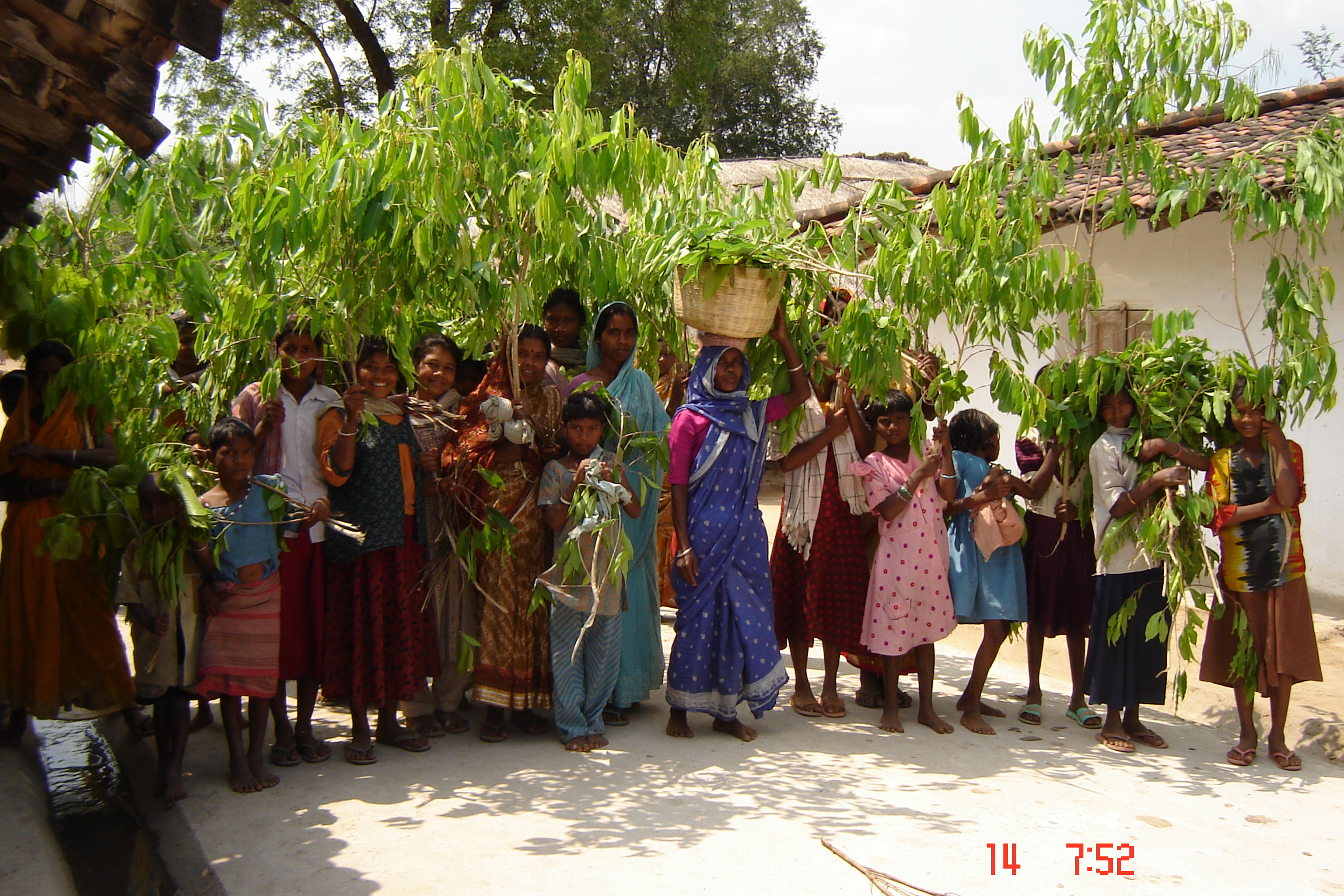
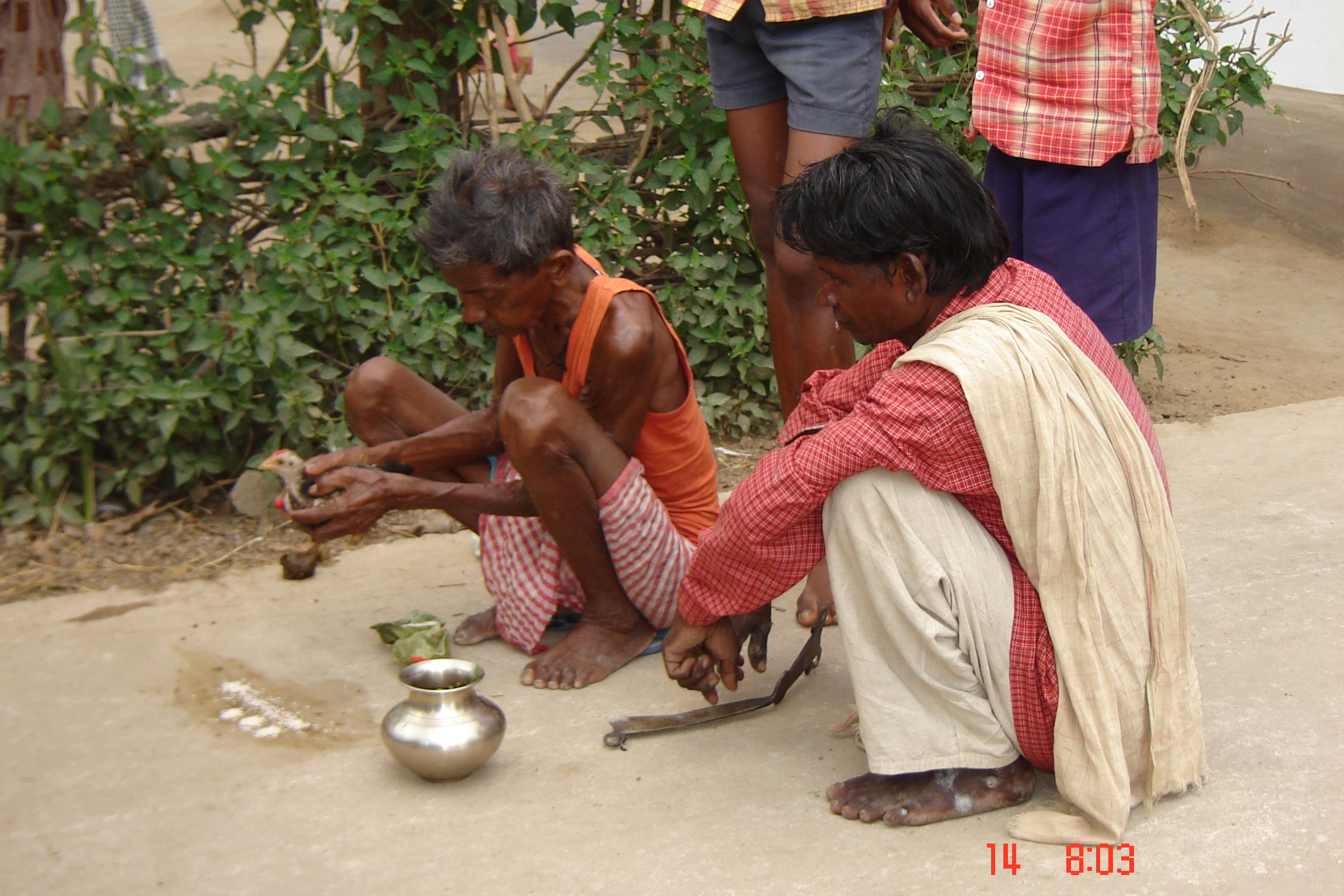
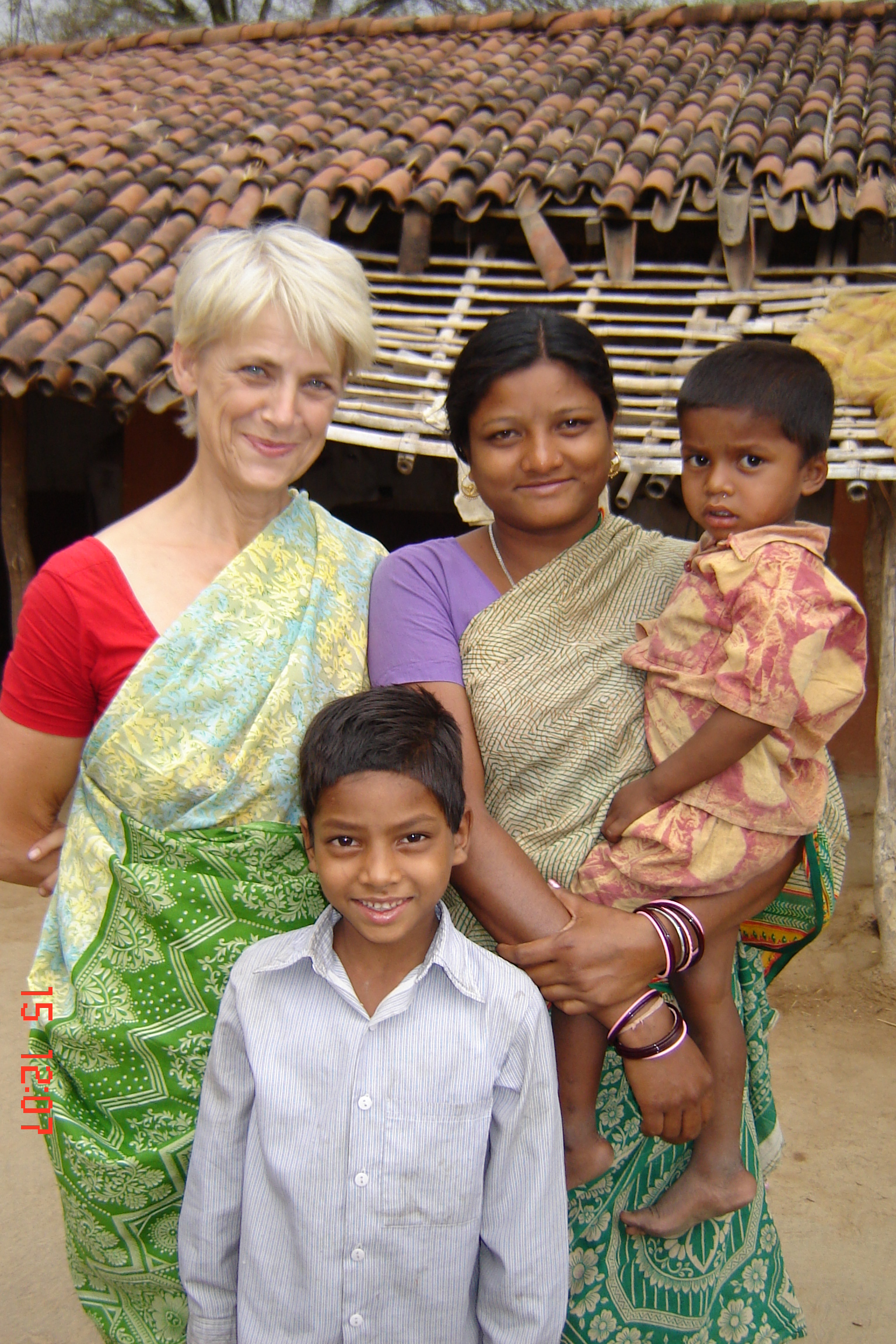
I am deeply grateful to the Ho communities of Kolhan and the wider Chota Nagpur Plateau who welcomed me into their lives and shared their worlds with me over many years of fieldwork. I also thank the many friends and colleagues in India whose support made my long-term research in Jharkhand and Odisha possible. Through this website, I offer glimpses from my fieldwork and everyday research life.
Feel free to reach me out!
Few things to keep in mind:
-
The photos and documents on this website are freely available in low-definition versions.
-
If you require an HD version, please contact me with the file number using the message section.
-
An acknowledgement of Dr Eva Reichel and AdivasiFieldNotes is required for any non-commercial use of photos, including exhibition, academic research and educational purposes.