Research : Eva Reichel
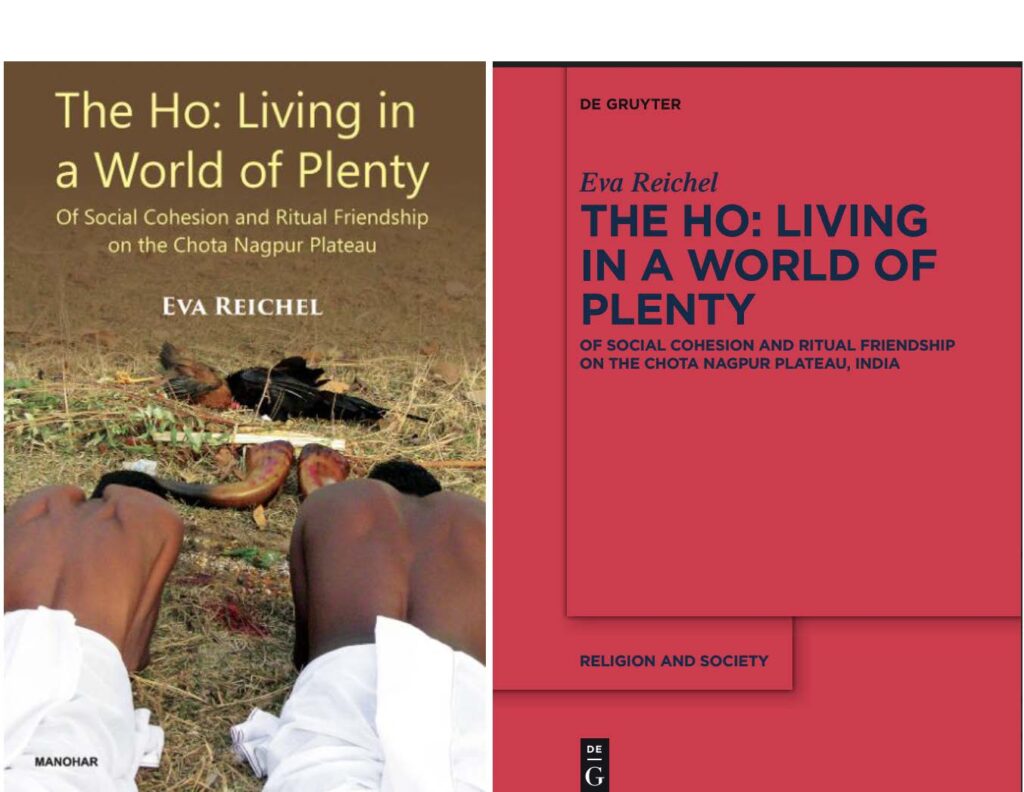
The Ho: Living in a World of Plenty. Of Social Cohesion, and Ritual Friendship on the Chota Nagpur Plateau, India
The book is an ethnographic study of the Ho community of the Chota Nagpur Plateau based on long-term fieldwork. It examines how social cohesion is created through ritual friendship, reciprocity, and everyday practices. It presents Ho society as a “world of plenty,” where social, spiritual, and material life are deeply interconnected.
Reichel, Eva. “The Ho: Living in a World of Plenty. Of Social Cohesion and Ritual Friendship on the Chota Nagpur Plateau, India.”
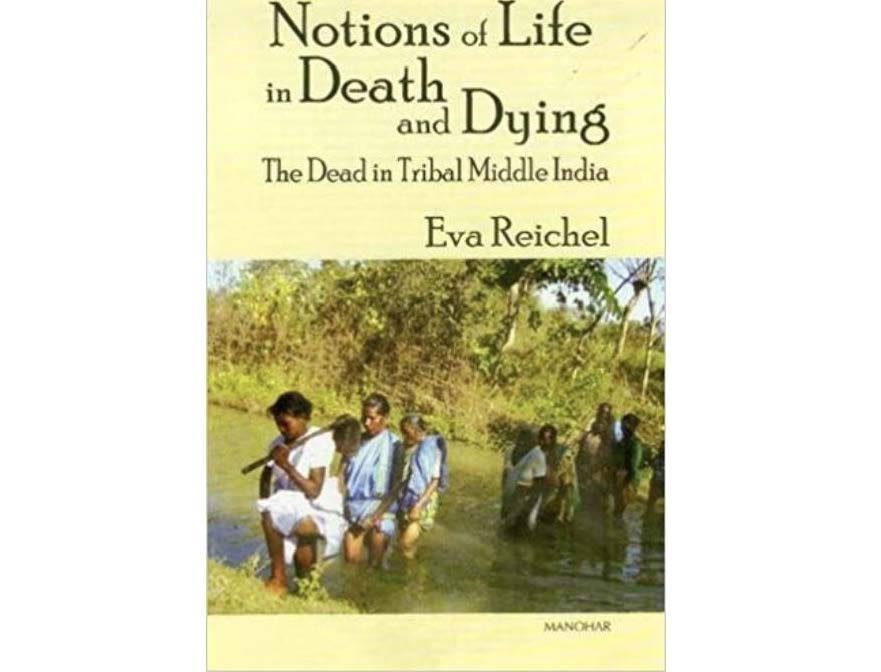
Notions of Life in Death and Dying: The Dead in Tribal Middle India.
The book challenges Western views by presenting death as a collective, ongoing process linking the living, the dead, and ancestors. It examines how tribal communities of Middle India understand death as a continuation of social life rather than an end. Through ethnographic study, it shows how rituals integrate the dead into everyday community and kinship relations.
Reichel, Eva. “Notions of Life in Death and Dying: The Dead in Tribal Middle India.” New Delhi: Manohar Publishers & Distributors, 2009. ISBN 978‑81‑7304‑823‑4. [Read/Download]
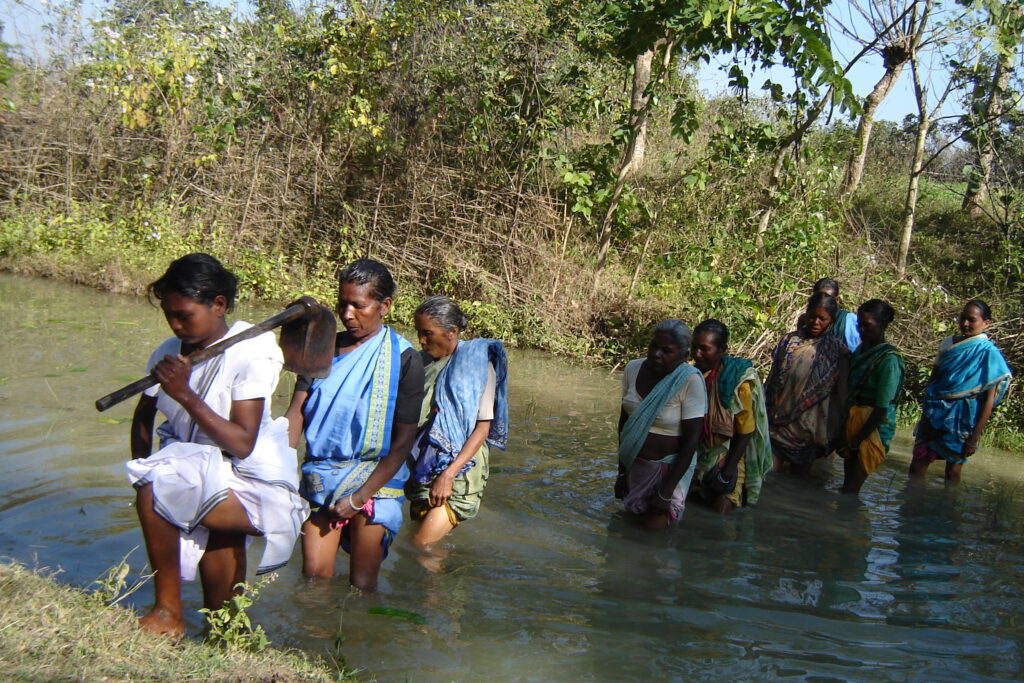
On Death and Dying. Relations between the Living and the Dead in Tribal Middle India
MA Thesis 2007: Freie Universität Berlin.
During my early fieldwork among Ho and Santal communities in northern Odisha, I encountered a social world in which relationships between the living and the dead were publicly enacted and woven into everyday life. The dead were treated as active social beings—fed, addressed, ritually cared for, and incorporated into household and village life—revealing death as a gradual, socially meaningful transition rather than a sudden biological event. These experiences fundamentally challenged my Western assumptions about death as an isolated and final moment. In seeking to understand how mortuary practices express core cultural values, I developed this line of inquiry in my Master’s thesis by situating Ho and Santal practices within comparative anthropological debates on death, drawing on ethnographies from other indigenous societies in Highland Middle India.
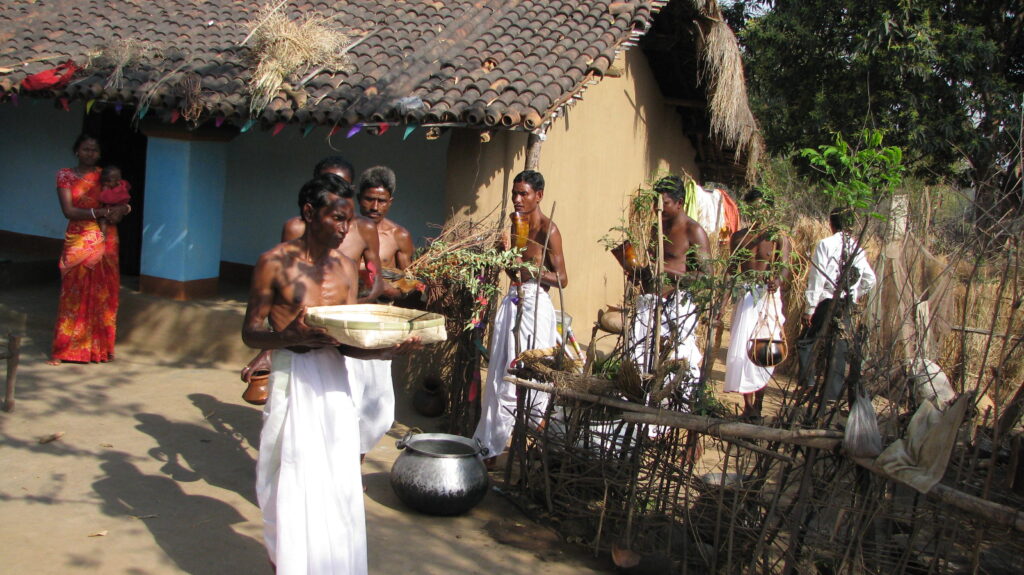
The Ho: Living in a World of Plenty. On Social Cohesion, Conviviality, and Ritual Friendship
Dr.Phil Thesis 2018: Johann Wolfgang Goethe‐Universität zu Frankfurt am Main
This research is based on more than sixteen months of participatory fieldwork among the Ho of central eastern India, primarily in the Kolhan region across present-day Odisha and Jharkhand. I focus on the Ho as a high-status adivasi community who conceive of themselves as first settlers and landholders within a multi-ethnic tribal world structured by shared space, labour, ritual, and history. This thesis explores how social cohesion and coexistence are sustained within the Ho socio-cosmic universe, which includes the living and the dead, spirits, deities, and both tribal and non-tribal others. By analysing social relations across ritual, economic, and linguistic domains, I show how Ho notions of abundance, relatedness, and continuity are actively reproduced. I also reflect on my own positionality, particularly the role of the ritual friendship (saki) that accompanied my fieldwork and emerged as a key lens for understanding relationality across tribal boundaries.
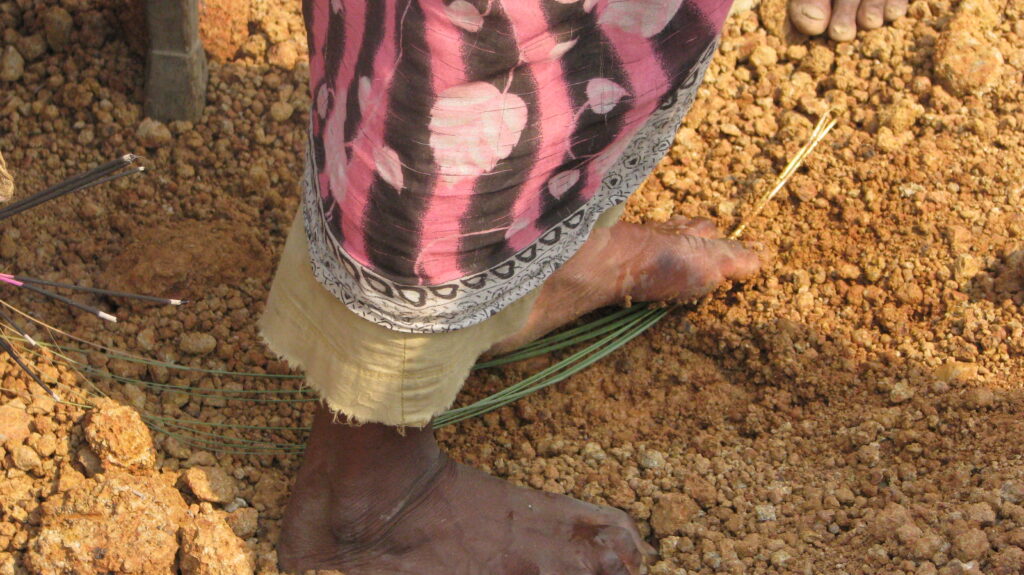
Ho ways of Dying and their Language of Mourning
Later published as: “Chapter 8: On Death and the Ho’s relationship with the Dead”, in U. Skoda & B. Pati (eds), (2017). Highland Odisha. Life and Society beyond the Coastal World. Delhi: Primus books, pp. 107-135.
In this chapter, I analyse Ho mortuary practices and the language of mourning to show how death is understood as a socially embedded, transformative process rather than a final biological event. Drawing on long-term fieldwork in Jharkhand and Odisha, I argue that Ho funerary rituals sustain continuity between the living and the dead by transforming the deceased into protective ancestors who remain active within household and community life. By contrasting Ho notions of death, personhood, and ancestry with Western and Hindu models, and by examining cases of both normative and “sudden” deaths, I show how mourning, ritual, and reciprocity articulate core Ho values concerning life, sociality, and cosmic order.
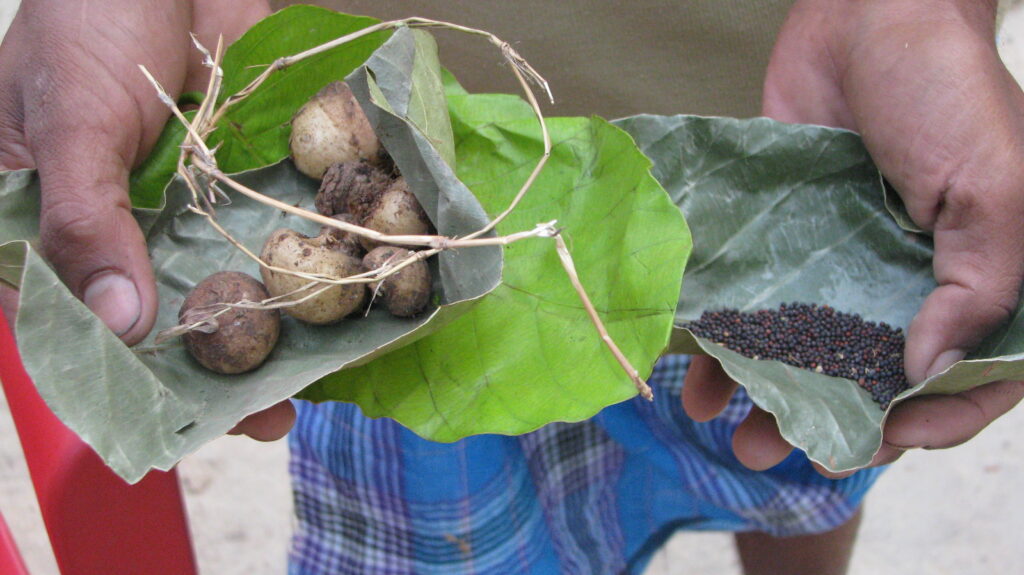
Exploring illness
“Exploring Illness: Notes from recent fieldwork among the Ho.” (2014) In D. K. Behera (ed.), Contemporary Society: Tribal Studies, Vol. 9. New Delhi: Cocept Publishing Company, pp. 32-46.
This ethnographic study explores Ho conceptions of illness and healing in eastern India, showing that sickness is understood as a disturbance within social, ancestral, and spiritual relationships rather than as an isolated bodily condition. Through the case of a Ho village headman caring for his ill son, the paper illustrates how healing involves ritual practice, kinship negotiation, moral causality, and selective use of biomedicine. It argues that Ho healing practices constitute a coherent and pragmatic system grounded in relational personhood, challenging interpretations that frame indigenous medicine as merely pre-scientific or symbolic.
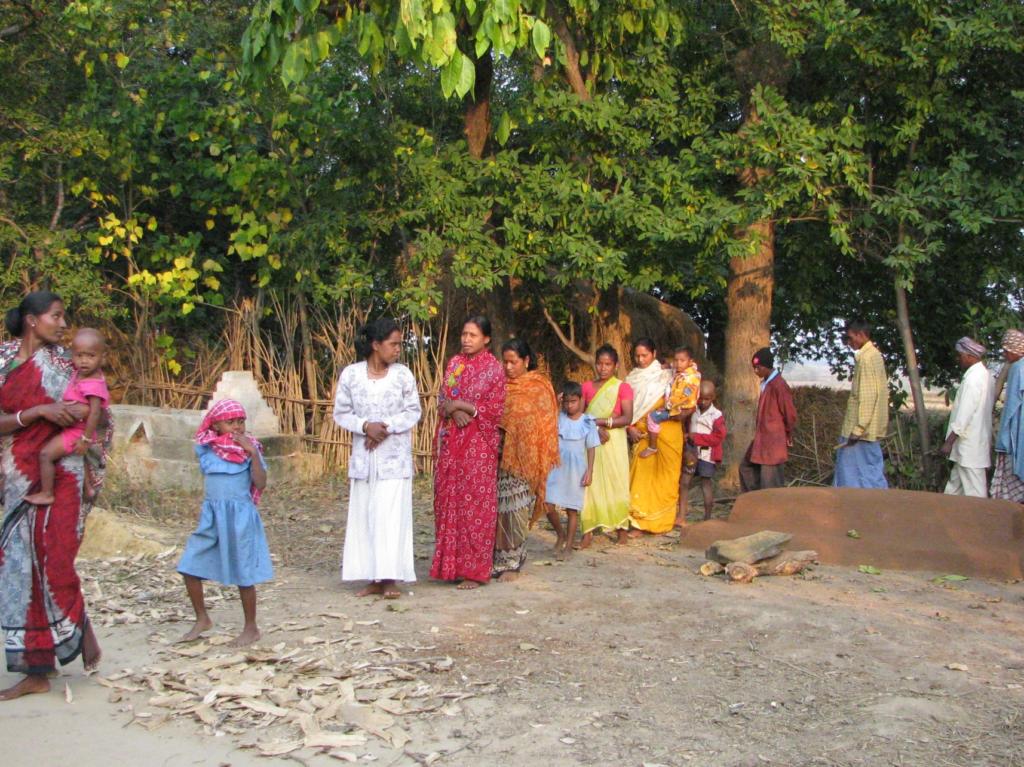
Gift exchanges between the Living and the Dead
Lecture presented at the EASA Congress, Tallinn (Panel 046), 2nd August 2014; published in Reichel (2020-2022), pp. 312-319.
This paper examines Ho mortuary rituals in Middle India, showing how gift exchanges between the living and the dead sustain kinship, ancestry, and social continuity. It argues that through first and secondary funerals, the deceased are transformed into active ancestor-persons who reciprocate ritual gifts with protection, fertility, and social well-being. Situating these practices within a Maussian framework, the study highlights reciprocity and hospitality as core Ho values through which collective identity and relationships are continually reproduced.
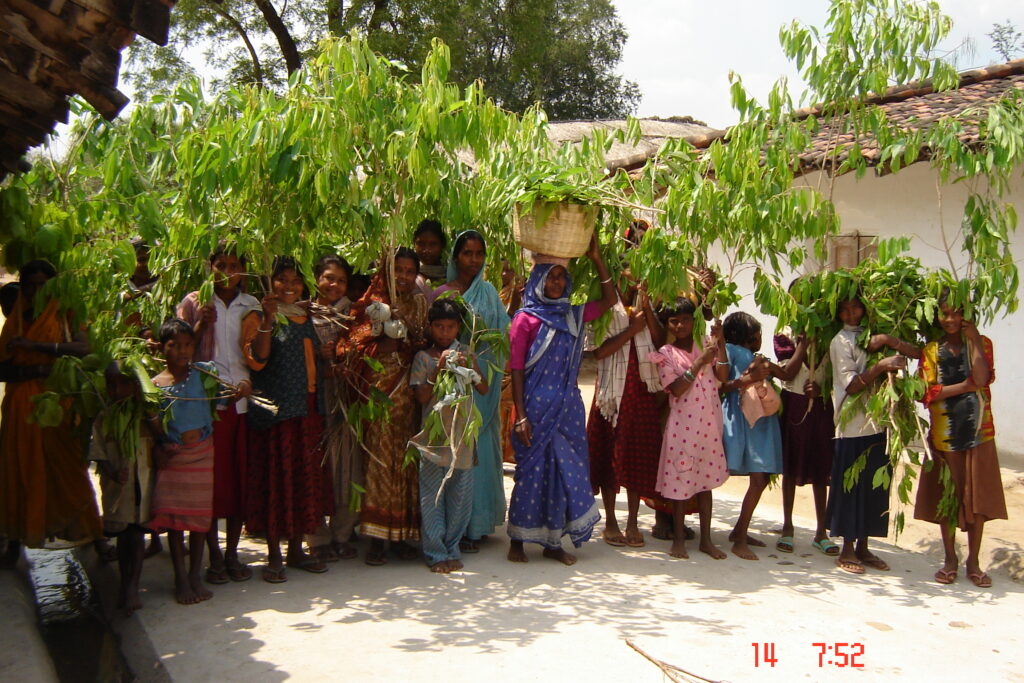
Ho children and fieldwork
“Concepts of Children and Childhood in Anthropology and in a Tribal Community of Middle India.” (2014) In The Oriental Anthropologist 14 (2): 189–201.
In this paper, I examine anthropological debates on children and childhood. I argue against universal, biologically driven models of childhood by showing how Ho children are socially and ritually constituted as competent persons from an early age. Through everyday interaction and ritual participation, they acquire personhood relationally, demonstrating that childhood is a culturally specific process embedded in social values, reciprocity, and collective life rather than a fixed developmental stage.
Friends in the Field
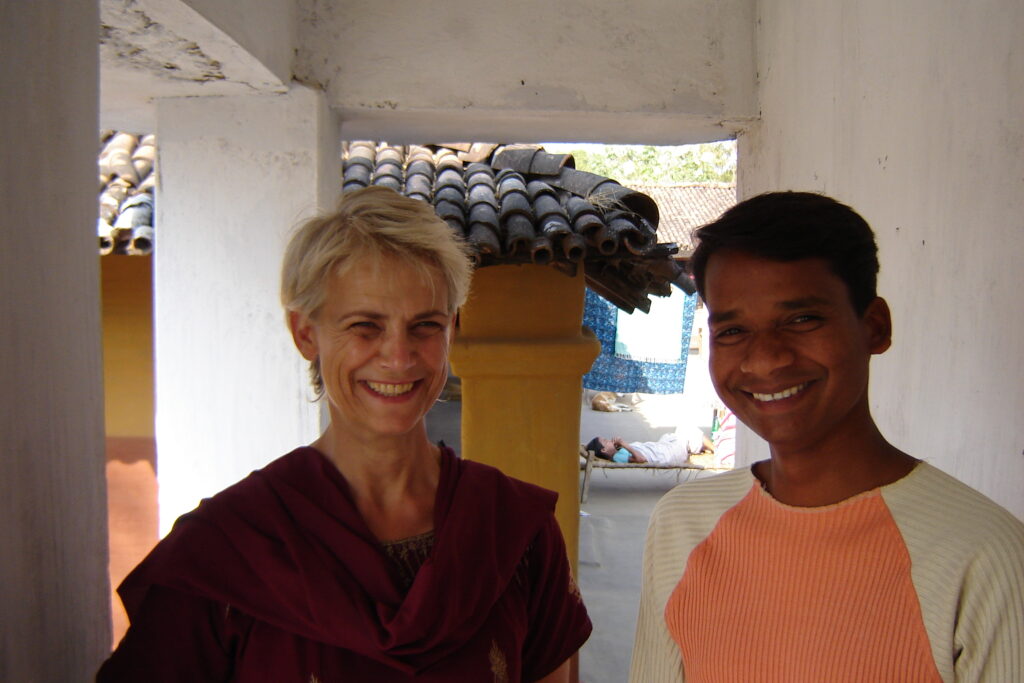
“Narrations of Commitment: Friends in the Field.” 2018 [2016] . In Empirical Anthropology . Issues of Academic Friends and Friends in the Field, ed. Georg Pfeffer & Nibedita Nath. New Delhi: Concept Publishing Company, pp.187-194.
In this paper, I reflect on the relationships and commitments that made my early fieldwork among the Ho possible, focusing on Indian colleagues, local intermediaries, and a research assistant whose support and differing expectations shaped my entry into the field. I argue that fieldwork is constituted through socially embedded collaboration rather than neutral access, and that trust, hierarchy, and friendship are central to anthropological knowledge production.
John Deeney and the Ho of Kolhan
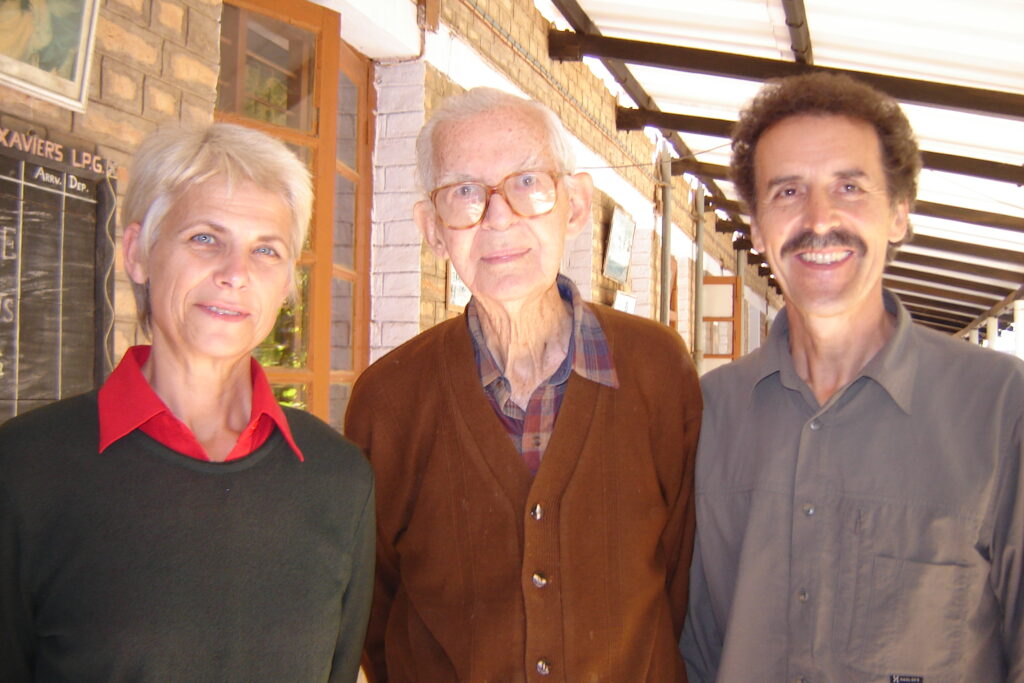
“Scholarly Commitment: John Deeney and the Ho of Kolhan” 2018 [2016]. In Empirical Anthropology. Issues of Academic Friends and Friends in the Field, ed. Georg Pfeffer & Nibedita Nath. New Delhi: Concept Publishing Company, pp.194–205.
In this paper, I reflect on my encounter and long-term engagement with John Deeney, a Jesuit scholar whose lifelong commitment to the Ho of Kolhan profoundly shaped the documentation of their language and socio-cosmic world. I examine his scholarly practice as one grounded in respect, patience, and collaboration—especially with Ho intellectual Dhanur Singh Purty—rather than development or conversion agendas. By situating Deeney’s linguistic and ethnographic work within both the Jesuit milieu and the broader marginalization of tribal studies, I argue that his legacy lies in preserving Ho perspectives on their own terms and making them accessible to future scholarship.
The field, the Anthropologist, and the Researcher’s Spouse
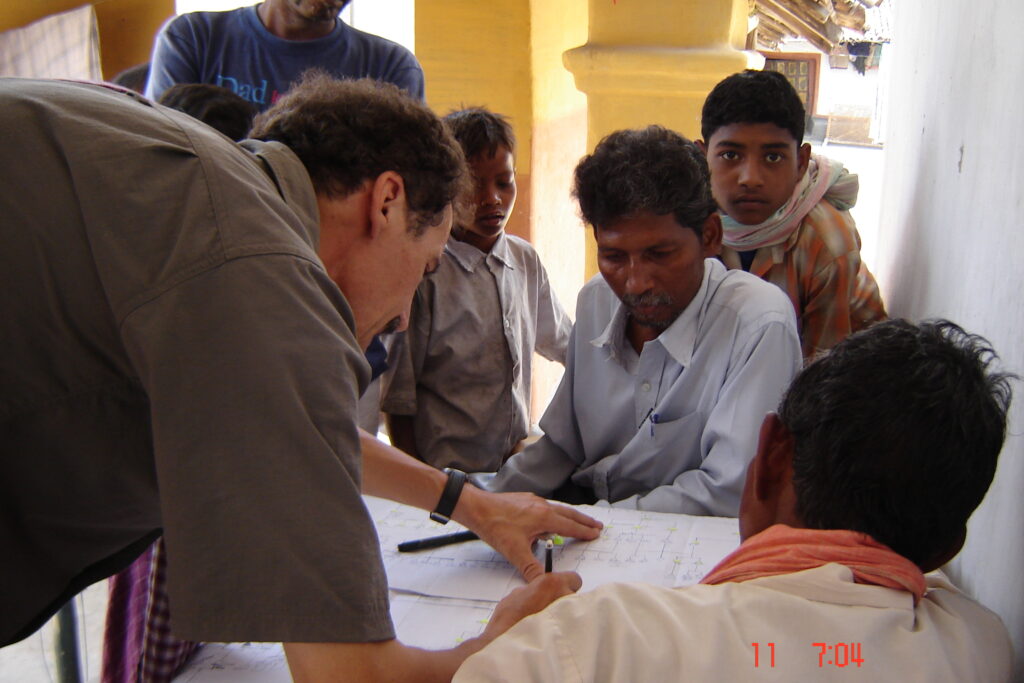
Empirical Anthropology. Issues of Academic Friends and Friends in the Field 2018 [2016], ed. Georg Pfeffer & Nibedita Nath. New Delhi: Concept Publishing Company, pp.205-215.
The author is Jürgen Wolff, my husband, who had visited me in the field several times while I was doing fieldwork there. G.Pfeffer, my supervisor, had developed the idea of editing a volume highlighting also those challenging, disagreeable, emotional, irritating and very practical aspects of survival, despair and suffering in the field. Doing fieldwork is about „blood, sweat, and tears“, he used to say, but only little has been published about this aspect. Obviously my husband, the researcher‘s spouse, had to suffer a lot from me, the Anthropologist, in the field (as I learnt when reading his text). This is his story of survival in the field.
Lecture on Muslim community
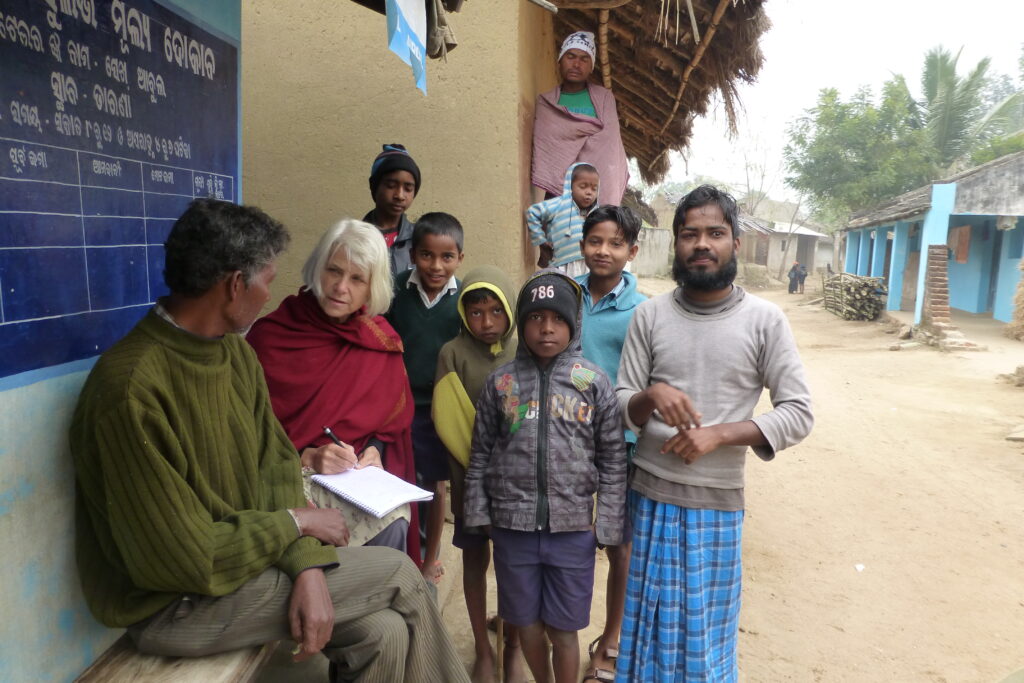
Groningen University – Lecture on Muslim community (13.08.2014)
In this paper, I present ethnographic reflections on a small Muslim client community living alongside the Ho in a tribal region of Jharkhand and Odisha, based on late-stage field encounters during my Ho fieldwork. I examine how Muslims and Ho coexist through clearly maintained social, ritual, and conceptual boundaries, characterized by economic interdependence, spatial proximity, and limited everyday interaction. By focusing on history, marriage, ancestry, and patron–client relations as articulated by Muslim interlocutors themselves, I argue that conviviality in this multi-ethnic setting is sustained less through intimacy than through principled distance, seniority, and mutual recognition of distinct social worlds.
On Death and the Ho's Relationship with their Dead
Groningen University – Lecture on Death and the Ho’s Relationship with their Dead (10.07.2013)
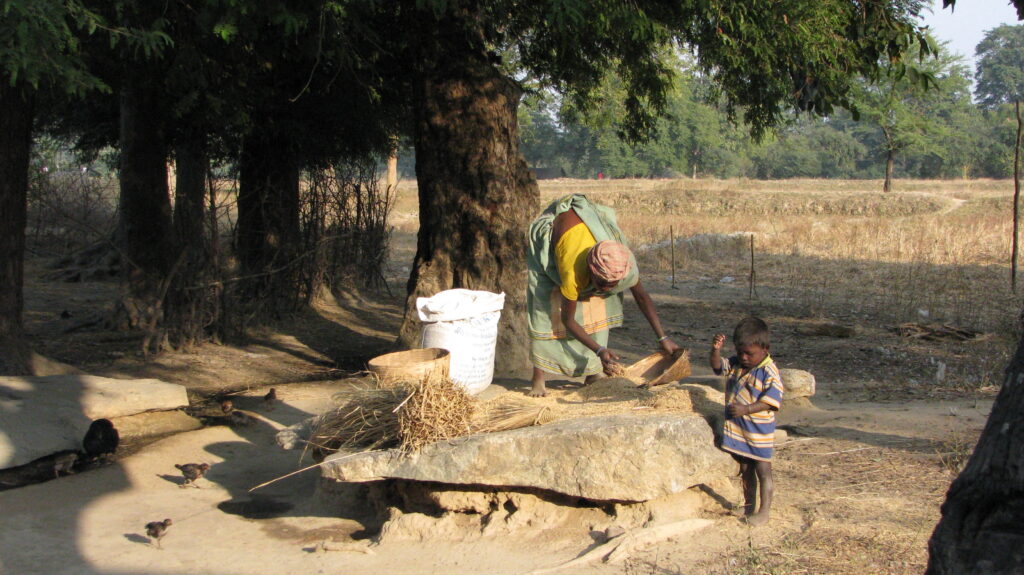
In this lecture, I explore Ho understandings of death, dying, and ancestry based on long-term fieldwork in tribal Middle India, contrasting them with Western and Christian conceptions of death as a final, individual event. I argue that for the Ho, death is a socially embedded, processual transformation through which the deceased are ritually separated from the body and gradually incorporated as protective ancestors who remain active members of the household and community. By examining funerary rituals, everyday ancestral practices, and the case of a “sudden” death that prevents full ancestral transformation, I show how Ho mortuary practices sustain social continuity, relational personhood, and ongoing reciprocity between the living and the dead.
On Ritual Friendship
Unpublished article (28.3.2016)
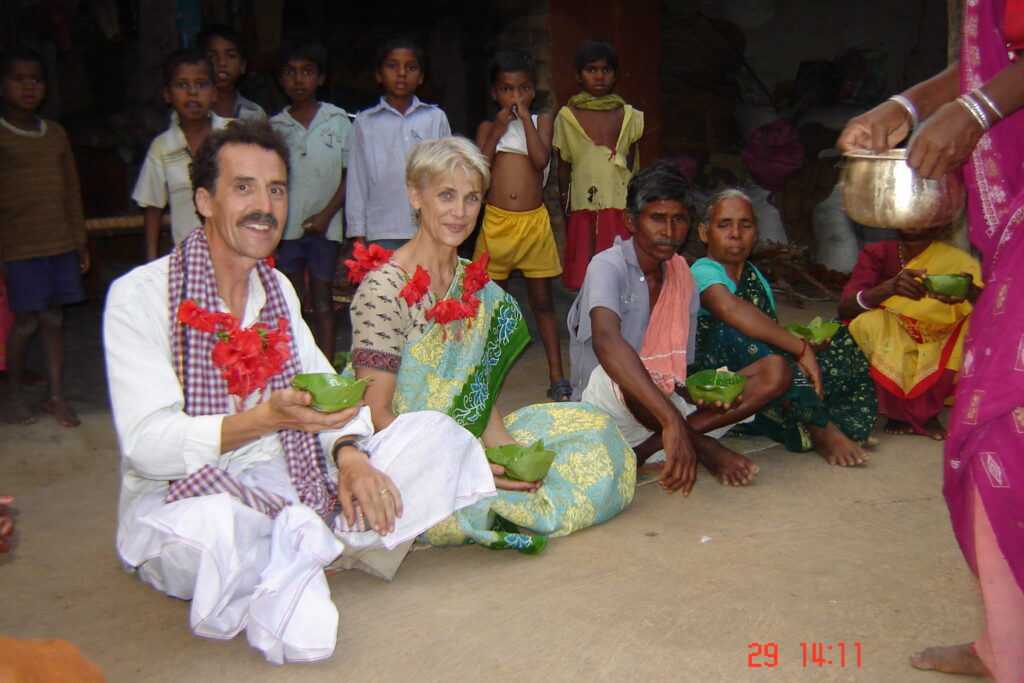
In this paper, I examine ritual friendship in Middle India, focusing on the Ho saki relationship as a distinctive form of socially embedded, affective, and enduring relatedness that cuts across kinship, clan, and tribal boundaries. Drawing on comparative anthropological literature and detailed ethnographic experience, I argue that saki is neither fictive kinship nor ordinary friendship, but a ritualized bond grounded in equality, mutual commitment, and shared moral personhood. By tracing how a saki relationship is established, lived, and integrated into everyday life and ritual practice, I show how ritual friendship operates as a powerful social resource through which trust, learning, and long-term cooperation are generated in the field and beyond.
Vom Tod, den Toten und den Lebenden
Tuebingen University – Lecture on fieldwork (02.11.2010) “Notizen zu meiner Feldforschung bei den Ho in Orissa/Indien”
Mein Beitrag heute beschäftigt sich damit, wie die Ho, eine von mehr als 60 Ethnien Mittelindiens, dem universellen bio physiologischen Phänomen des Todes auf ihre kulturspezifische Art und Weise begegnen.
Meine Ausführungen stützen sich dabei auf mehrere Feldforschungsaufenthalte zwischen 2004 und 2010 im nördlichen Orissa und südlichen Jharkhand, den beiden Bundesstaaten Südasiens, in denen die überwiegende Mehrheit der ca. 1 Million Ho lebt.
Nach einer kurzen Einführung zu den Ho werde ich Ihnen die Gliederungspunkte meines Vortrags vorstellen.